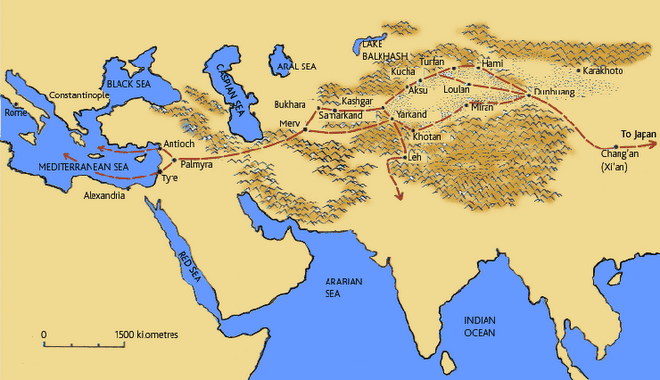
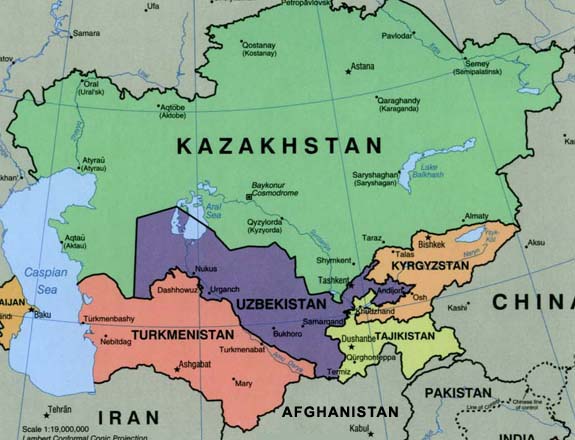
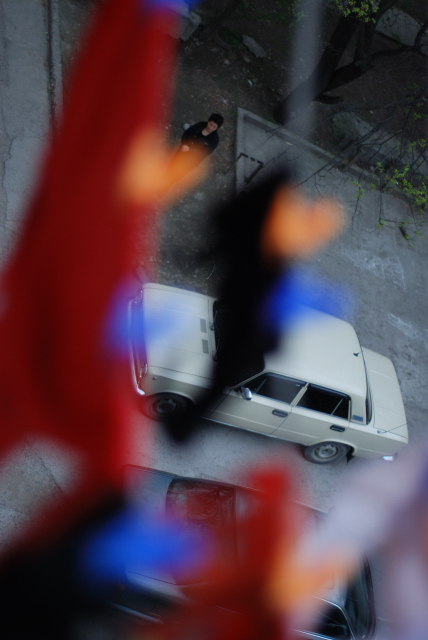
Reaching Southern Kyrgyzstan and its expansive flat and fertile agricultural land, one begins to wonder if the Tunduk – the yurt center – is a symbol wide enough to include these agricultural towns and urban centers – these places of passage, once protected by city walls. The Tunduk suddenly feels like a narrow definition for the nation. Not all here were once nomads. So boldly painted on the flag, I wonder if the numerous Uzbek population of Kyrgyzstan’s south resents this symbol that so blatantly excludes them.
a first thought on entering the Fergana Valley.
Tuesday, August 28, 2007

some color still

if there is shadow, there must be color still.

(a preview of the Qashga'i nomads... some soul, before i return to the chronological order of things)


out of time, out of mind

sometimes you have got to break chronologies to find again those orders, those frameworks that make things work. breaking mechanics to oil that rusting machinery of our routines.


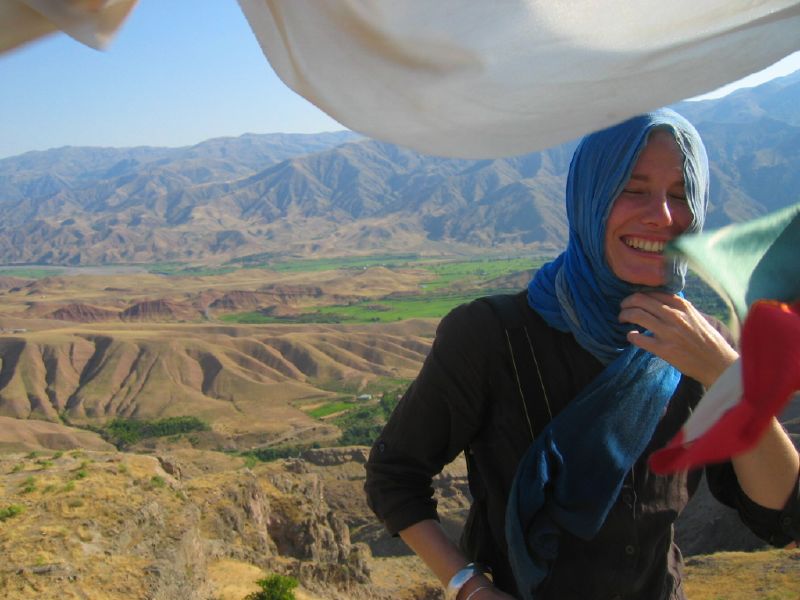
so here, out of order (because I have yet to write about time spent in Uzbekistan and Tajikistan), some shadows of three blistering cloudy weeks in a sophisticated land where I have walked mostly heartbroken and splintered, searching for some traction to these bustling, densely populated schizophrenic cities and their people. walking part whole, part covered, badly dodging the slippery greedy hands of marauding perverts (young and open-faced fellows), surprised that I have not yet learned to sense the approach of their unwelcomed pinches and strokes. (Wishing too that I had learned wushu. ba bam!)

Outside, a parade in shades of black: femininity over-baking under the sun. Having to zoom into visible details – a nose, a painted piercing eye, a delicate hand – to find the soul of the world - that beauty that lets us live.


Three weeks digesting the first culture shock for me on this journey: soul-shaking, a rocky bumpy ride – which ended only recently in a flight from the beautiful and disturbing urban centers to find refuge in the Zargos mountains among the color and femininity of the Qashga’i nomads. a breath of dance.

finally finding some footing here in Iran – this subtle, brutal, multi-ethnic, poetic place at the heart of the world and history.


Friday, June 29, 2007
Reclaiming the Nomad - At the Center a Yurt
A Home in Nature
A red carcass, made from fire, wood, water and sweat. Its exterior made from the shepherd’s bounty: wool felt and song. The yurt is the center of life: a mobile hearth, the center of the nomad’s creativity and freedom.


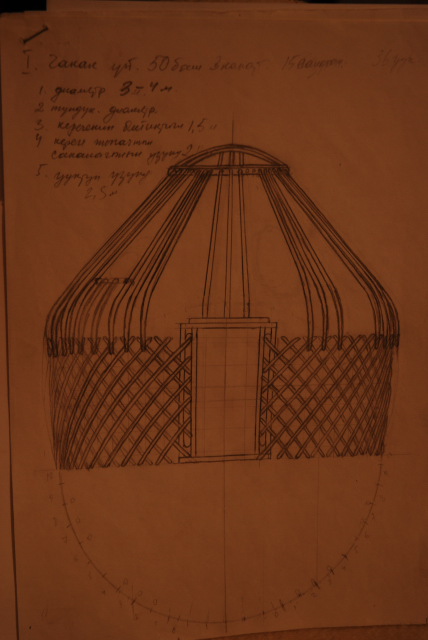
The yurt consists of many parts: the wooden lattice, the kerege, on which uuk, curved wooden poles are tied to hold the crowning cap - the tyunduk – which acts as both a window and a flue (chimney). The Chi, or reed wrapping, decorated with colored threads protects from wind and dampness. Thick pressed wool (felt) coverings wrap the outside, and then there are Alakiiz (multi-colored felt carpets), Shyrdak (the quilted/appliqué felt mosaic carpet used to decorate the walls and floor), Jabyk Bash (embroidered curtains for the Yurt door), Teigirich (the horizontally woven border decoration for the outside of the yurt), Tchachery, the woven interior decorations, and others still.
To make the yurt takes patience, skill, and soul.


It is a practical, functional home into which creativity and life are woven: Soul integrated into the daily life. The yurt is creation intricately intertwined with survival. It embodies the nomad’s respect for his world, the environment – and is made of all the elements in the proximity of the nomad: wood, wool, reed, water, fire, natural dyes. Simple, it is full of spiritual generosity: colors, symbols, forms, and patterns which unveil the spirit, soul and energies of the makers.


The whole expresses the world of the nomad, their freedoms and the harmony of their lives in nature. To pack it up and shift pasture lands takes a mere three to five hours. It is the embodiment of mobility.
The yurt stands at the intersection of science (architecture, form) and the enchantment of nature and spirituality. At its core is a lifestyle of meaning and unity with nature.
Kyyzl Tyy
I go to Kyyzl Tyy – a village of Yurt-makers with the golden-toothed Salkyn – my friend and interpreter from Bakenbaevo. We go meet the open-faced Gulbar and Sapar – a man and wife team. Sapar and his two sons build the wooden elements of the yurt, while Gulbar and three women from the village make the felt and reed elements that will decorate and protect the frame. The yurt is a union of labor, a union of the sexes – partitioned by separate tasks, but brought together in the whole.


Sapar and Gulbar make about five complete yurts a year, and about 20 carcasses – just the wooden frame. One yurt needs about 15 parts of felt, thick and sturdy to last a decade. The wooden frame lasts for two decades, outside in all the elements, it is built to last.
Sapar, now 54 has been making yurts since he was 12 years old, taught by his father. His is a family trade that has continued for multiple generations - more than he remembers. His grandfather also made jewelry. Sapar says that if his father had continued to make jewelry, he too would still make it, but his grandfather died while his father was still young, and the knowledge disappeared.
We sit down to tea. The cows are in the summer pastures – so there is no fresh milk, and we spoon powdered milk into our black tea.
The mosque calls to prayer, and Sapar’s two sons rush out of the studio. They are beautiful, tall and lean, with sun-kissed dark skin and sharp eyes. The mullah beckons and the sons run off to the mosque, where they pray five times a day. The mosque in Kyyzl Tyy was finished 3 months ago. Before, the sons would go every Friday for the Juma Namaz in the neighboring town. Now, proximity enables more fervent devotion. The mosque was built with Syrian money: new, shiny, calling. Gulbar and Sapar do not pray, but they are happy that their sons are learning. Gulbar says it will give them a good education and up-bringing, while keeping them away from alcohol, drugs and cigarettes – the common ailments of the village men.
Over the past decade, almost every household in Kyyzl Tyy has started to make Yurts. After the close of the Soviet Yurt factories (production was centralized), local and foreign demand for the portable hearths increased, and the whole village went to work. Mostly, they are exported to tourist centers, where travelers pay a steep price to experience the great wide. Some are still bought by local semi-nomadic shepherds.
Sapar says that ten years ago only five or six families made yurts, but today more than 100 families are involved in the trade. He does not think this will last, as many of the yurt-makers make sub-standard quality. However, in the meantime, the increase in production has put great pressure on the local willow trees used to make the carcass. Where once, Sapar used to just cut down trees from the neighboring forests, he now has to buy wood from Jetty Ogus, a valley about one hour from Kyyzl Tyy.
A Way of Life
But despite this boost in the local Kyyzl Tyy economy, today, the semi-nomadic way of life the yurt embodies is threatened. Urbanization and globalization are forever pulling people away from the nomadic lifestyle, luring them with tales of fabulous wealth, material goods and the unsustainable luxuries of our Western lives. (of course, there are many good things about our way of life: health care, education, travel and many others, but there are also many problems. here, I’m thinking about the problems). The Kyrgyz are increasingly sedentary – the impact of sovietization and today’s global world. They are losing touch with the land, and the symbiotic relations of man and nature are being exploded – worn down, strained.

Ak-Terek, a Bishkek based NGO supported by the Christensen Fund (“backing the stewards of cultural and biological diversity”) studies the traditional knowledge surrounding the yurt and the economy of the nomads – animal husbandry. The stunningly beautiful and soft-spoken director of Ak-Terek, Nazgul Esengulova, is worried that the links between generations are weakening, and much of the traditional knowledge of the pasturelands and the nomadic lifestyle are disappearing.
The biocultural landscape of the Kyrgyz nomads is shifting rapidly, perhaps irremediably. Nazgul tells of the extreme land degradation that the Kyrgyz herders have inherited from the Soviets. Focused on quantity, the soviets multiplied the amount of sheep herded on pasture-lands – thus draining the richness of the pasture soils. They ignored the traditional rotation of pastures, and brought scientific methods to the animal husbandry: vaccinations, calendars and time-tables etc. That delicate balance, and “ecoute” or listening of the land disappeared. Where once the grazing times and places were determined by knowledgeable/versed herders who could read the pastures by the appearance of certain plants and animals, under the Soviets, all pasture land was used to full capacity, ignoring the traditional signs of over-grazing etc.. Furthermore, in creating a commune, the Soviets took away ownership of the land, thus taking away the intimate link and responsibility towards the land. The commune broke that deep respect between a herder and his pasture.

Here ecology and culture collide. How we live – our cultural norms, lifestyles - impact our natural world. (why do we always need to look elsewhere to be reminded). It is an interesting field of work – understanding a biocultural landscape. a double lens of culture and science.
The delicate knowledge of the pastures’ cycles, including its shifting plant and animal-life have all but disappeared. Nazgul and her organization have worked with many of the herders around the Song Kul alpine lake. She speaks of an elder in Tuluk village, Albi Mahamat Ata, who at 84 still knows a lot about the land and its signs. But he’s getting old she says, and often mixes up stories, and slips and slides between realities. The elders are disappearing, and with them that sacred – incredibly ancient - knowledge. Today, Nazgul says, many of the young herders do not want to listen to what little traditional knowledge remains, they rely on science and technology. They now force open mountain passes with bulldozers, rarely rotate their pastures, and have short-term profitability goals.
Where we – the ultra-modern West - should be learning from nomads, they are unfortunately learning from us. Our rapid, secular, disenchanting worlds are conquering even these high-mountain pastures.
The yurt which is the physical embodiment of the nomad’s sustainable subsistence and spiritual world may remain – in museums and tourist destinations – but the real soul and indigenous traditions and knowledge from which it was crafted are disappearing fast.
I’m thinking about Dinara Chuchunbaeva who said that, “Today, the disappearance of traditional cultural values [is] precipitating the extinction of traditional skills and expertise accumulated for ages, handicrafts are becoming a rarity (…)”
Perhaps crafts can be saved, continued – but what about this soul, this knowledge, this lifestyle. Can we ignore this when working with crafts – the soul and values from which they emerged?
A red carcass, made from fire, wood, water and sweat. Its exterior made from the shepherd’s bounty: wool felt and song. The yurt is the center of life: a mobile hearth, the center of the nomad’s creativity and freedom.
for more pictures: http://www.flickr.com/photos/silkroadproject/sets/72157600307504833/

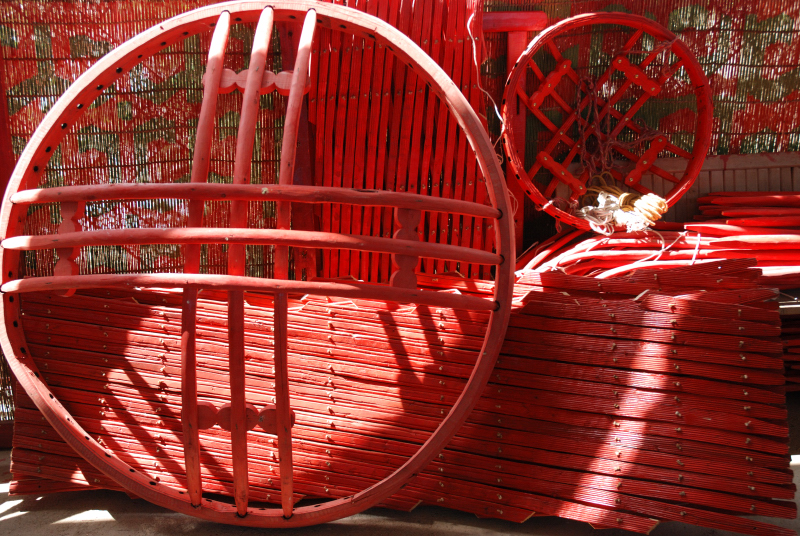
The yurt consists of many parts: the wooden lattice, the kerege, on which uuk, curved wooden poles are tied to hold the crowning cap - the tyunduk – which acts as both a window and a flue (chimney). The Chi, or reed wrapping, decorated with colored threads protects from wind and dampness. Thick pressed wool (felt) coverings wrap the outside, and then there are Alakiiz (multi-colored felt carpets), Shyrdak (the quilted/appliqué felt mosaic carpet used to decorate the walls and floor), Jabyk Bash (embroidered curtains for the Yurt door), Teigirich (the horizontally woven border decoration for the outside of the yurt), Tchachery, the woven interior decorations, and others still.
To make the yurt takes patience, skill, and soul.
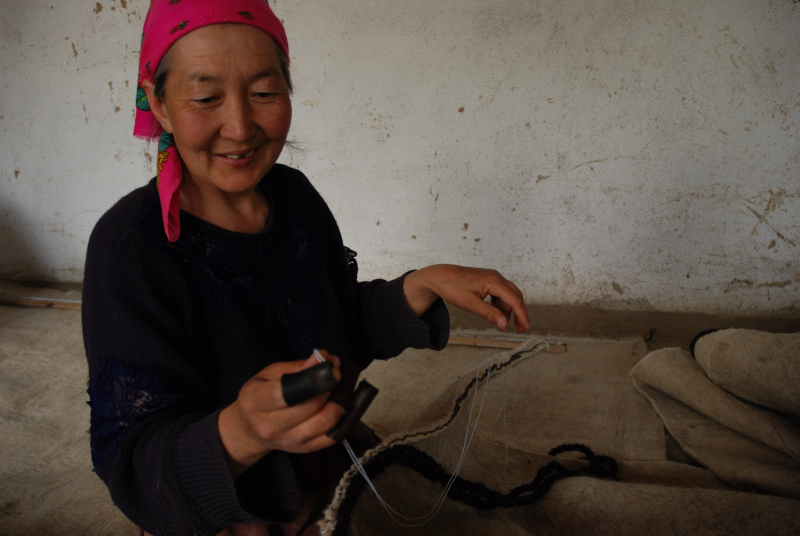
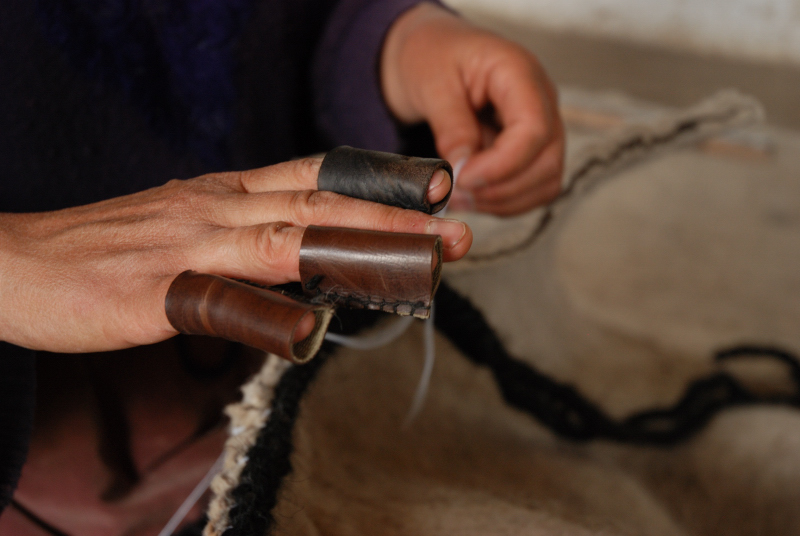
It is a practical, functional home into which creativity and life are woven: Soul integrated into the daily life. The yurt is creation intricately intertwined with survival. It embodies the nomad’s respect for his world, the environment – and is made of all the elements in the proximity of the nomad: wood, wool, reed, water, fire, natural dyes. Simple, it is full of spiritual generosity: colors, symbols, forms, and patterns which unveil the spirit, soul and energies of the makers.


The whole expresses the world of the nomad, their freedoms and the harmony of their lives in nature. To pack it up and shift pasture lands takes a mere three to five hours. It is the embodiment of mobility.
The yurt stands at the intersection of science (architecture, form) and the enchantment of nature and spirituality. At its core is a lifestyle of meaning and unity with nature.
Kyyzl Tyy
I go to Kyyzl Tyy – a village of Yurt-makers with the golden-toothed Salkyn – my friend and interpreter from Bakenbaevo. We go meet the open-faced Gulbar and Sapar – a man and wife team. Sapar and his two sons build the wooden elements of the yurt, while Gulbar and three women from the village make the felt and reed elements that will decorate and protect the frame. The yurt is a union of labor, a union of the sexes – partitioned by separate tasks, but brought together in the whole.
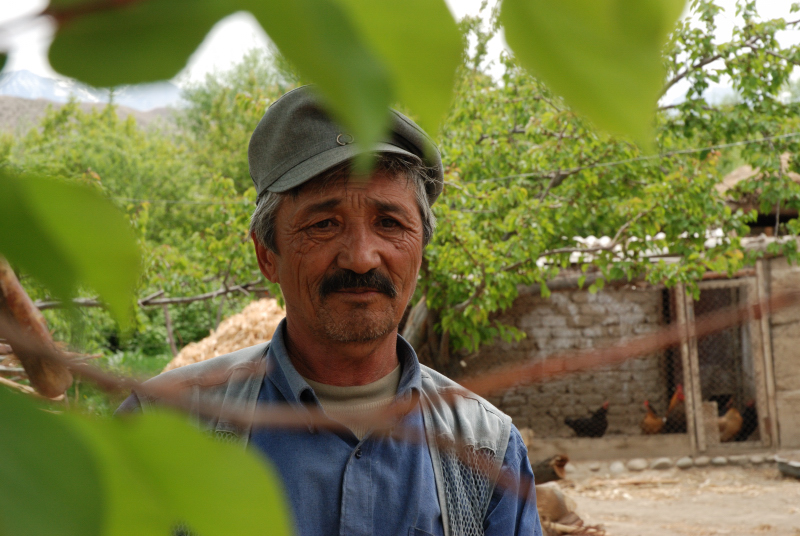
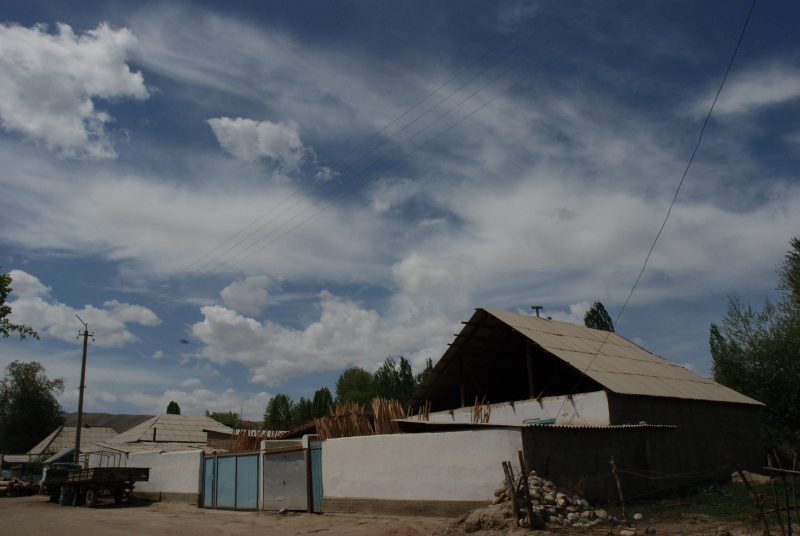
Sapar and Gulbar make about five complete yurts a year, and about 20 carcasses – just the wooden frame. One yurt needs about 15 parts of felt, thick and sturdy to last a decade. The wooden frame lasts for two decades, outside in all the elements, it is built to last.
Sapar, now 54 has been making yurts since he was 12 years old, taught by his father. His is a family trade that has continued for multiple generations - more than he remembers. His grandfather also made jewelry. Sapar says that if his father had continued to make jewelry, he too would still make it, but his grandfather died while his father was still young, and the knowledge disappeared.
We sit down to tea. The cows are in the summer pastures – so there is no fresh milk, and we spoon powdered milk into our black tea.
The mosque calls to prayer, and Sapar’s two sons rush out of the studio. They are beautiful, tall and lean, with sun-kissed dark skin and sharp eyes. The mullah beckons and the sons run off to the mosque, where they pray five times a day. The mosque in Kyyzl Tyy was finished 3 months ago. Before, the sons would go every Friday for the Juma Namaz in the neighboring town. Now, proximity enables more fervent devotion. The mosque was built with Syrian money: new, shiny, calling. Gulbar and Sapar do not pray, but they are happy that their sons are learning. Gulbar says it will give them a good education and up-bringing, while keeping them away from alcohol, drugs and cigarettes – the common ailments of the village men.
Over the past decade, almost every household in Kyyzl Tyy has started to make Yurts. After the close of the Soviet Yurt factories (production was centralized), local and foreign demand for the portable hearths increased, and the whole village went to work. Mostly, they are exported to tourist centers, where travelers pay a steep price to experience the great wide. Some are still bought by local semi-nomadic shepherds.
Sapar says that ten years ago only five or six families made yurts, but today more than 100 families are involved in the trade. He does not think this will last, as many of the yurt-makers make sub-standard quality. However, in the meantime, the increase in production has put great pressure on the local willow trees used to make the carcass. Where once, Sapar used to just cut down trees from the neighboring forests, he now has to buy wood from Jetty Ogus, a valley about one hour from Kyyzl Tyy.
A Way of Life
But despite this boost in the local Kyyzl Tyy economy, today, the semi-nomadic way of life the yurt embodies is threatened. Urbanization and globalization are forever pulling people away from the nomadic lifestyle, luring them with tales of fabulous wealth, material goods and the unsustainable luxuries of our Western lives. (of course, there are many good things about our way of life: health care, education, travel and many others, but there are also many problems. here, I’m thinking about the problems). The Kyrgyz are increasingly sedentary – the impact of sovietization and today’s global world. They are losing touch with the land, and the symbiotic relations of man and nature are being exploded – worn down, strained.

Ak-Terek, a Bishkek based NGO supported by the Christensen Fund (“backing the stewards of cultural and biological diversity”) studies the traditional knowledge surrounding the yurt and the economy of the nomads – animal husbandry. The stunningly beautiful and soft-spoken director of Ak-Terek, Nazgul Esengulova, is worried that the links between generations are weakening, and much of the traditional knowledge of the pasturelands and the nomadic lifestyle are disappearing.
The biocultural landscape of the Kyrgyz nomads is shifting rapidly, perhaps irremediably. Nazgul tells of the extreme land degradation that the Kyrgyz herders have inherited from the Soviets. Focused on quantity, the soviets multiplied the amount of sheep herded on pasture-lands – thus draining the richness of the pasture soils. They ignored the traditional rotation of pastures, and brought scientific methods to the animal husbandry: vaccinations, calendars and time-tables etc. That delicate balance, and “ecoute” or listening of the land disappeared. Where once the grazing times and places were determined by knowledgeable/versed herders who could read the pastures by the appearance of certain plants and animals, under the Soviets, all pasture land was used to full capacity, ignoring the traditional signs of over-grazing etc.. Furthermore, in creating a commune, the Soviets took away ownership of the land, thus taking away the intimate link and responsibility towards the land. The commune broke that deep respect between a herder and his pasture.
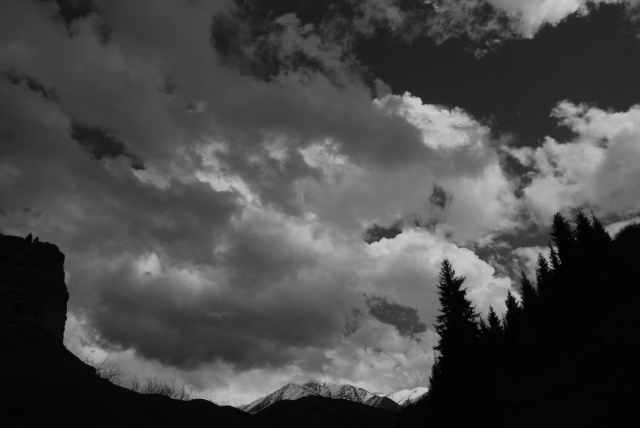
Here ecology and culture collide. How we live – our cultural norms, lifestyles - impact our natural world. (why do we always need to look elsewhere to be reminded). It is an interesting field of work – understanding a biocultural landscape. a double lens of culture and science.
The delicate knowledge of the pastures’ cycles, including its shifting plant and animal-life have all but disappeared. Nazgul and her organization have worked with many of the herders around the Song Kul alpine lake. She speaks of an elder in Tuluk village, Albi Mahamat Ata, who at 84 still knows a lot about the land and its signs. But he’s getting old she says, and often mixes up stories, and slips and slides between realities. The elders are disappearing, and with them that sacred – incredibly ancient - knowledge. Today, Nazgul says, many of the young herders do not want to listen to what little traditional knowledge remains, they rely on science and technology. They now force open mountain passes with bulldozers, rarely rotate their pastures, and have short-term profitability goals.
Where we – the ultra-modern West - should be learning from nomads, they are unfortunately learning from us. Our rapid, secular, disenchanting worlds are conquering even these high-mountain pastures.
The yurt which is the physical embodiment of the nomad’s sustainable subsistence and spiritual world may remain – in museums and tourist destinations – but the real soul and indigenous traditions and knowledge from which it was crafted are disappearing fast.
I’m thinking about Dinara Chuchunbaeva who said that, “Today, the disappearance of traditional cultural values [is] precipitating the extinction of traditional skills and expertise accumulated for ages, handicrafts are becoming a rarity (…)”
Perhaps crafts can be saved, continued – but what about this soul, this knowledge, this lifestyle. Can we ignore this when working with crafts – the soul and values from which they emerged?
Reclaiming the Nomad - the Sacred
sacred places.
mazars. manas in the city
will we still know how to express emotion in the cement centers of our global worlds?
have we already forgotten?
I think of Lizou, crying when we depart.
and that afternoon when Dad bid me farewell with some dollars, a holy book and tears.
for more pictures: http://www.flickr.com/photos/silkroadproject/sets/72157600374643203/

we have ridden out of the city. a van. scholars, travelers, and mazar-keepers. we have entered those green summer valleys around Bishkek, where the mountains fold green and rock into inviting canyons leading upwards. a winding road up to Chong-Tash.
we arrive into the afternoon buzz of insects and a small stream.
all of the sudden, he throws his arms up into the air. running wildly up to the memorial, crying, yelping. sadness and astonishment. disbelief. he runs up the stairs to the brick kiln where 140 people – the elite of Kyrgyzstan – were executed in one of Stalin’s purges in 1937. there he sits, finds a piece of paper, a pen, and writes rapidly. words. prayers. voices. emotion.

we have come to the Chong-Tash memorial with the keepers of Mazars - sacred sites. we sit down to pray. palms upwards. open. prayers for the world, its madness and its calm. Allah Akhbat. we break bread and share the music of prayer. Stalin, father of death. will the shaman voices expel his dark soul from the world?
Chong-Tash. November 5, 1937

shadows and blood.
we shall reconquer these areas. plant a tree of life and build an opening to the sky.

(many thanks to Aigine and Gulnara Aitpaeva for sharing this with me)

mazars. manas in the city
will we still know how to express emotion in the cement centers of our global worlds?
have we already forgotten?
I think of Lizou, crying when we depart.
and that afternoon when Dad bid me farewell with some dollars, a holy book and tears.
for more pictures: http://www.flickr.com/photos/silkroadproject/sets/72157600374643203/
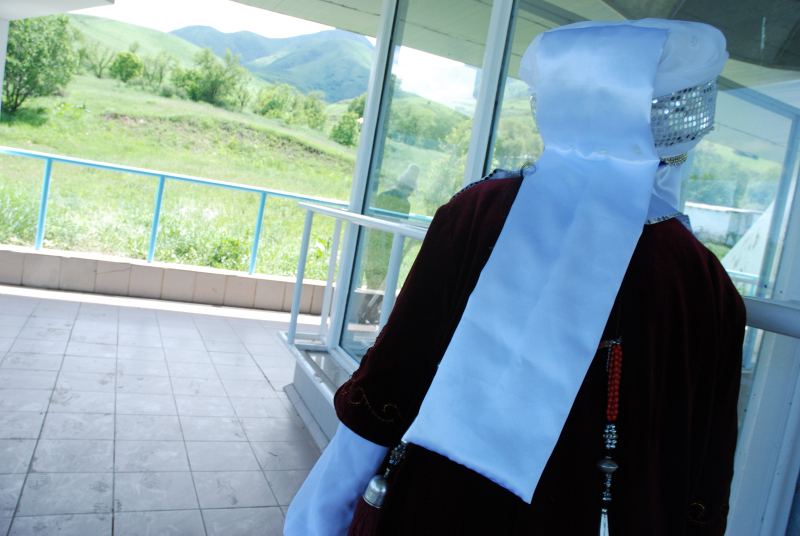
we have ridden out of the city. a van. scholars, travelers, and mazar-keepers. we have entered those green summer valleys around Bishkek, where the mountains fold green and rock into inviting canyons leading upwards. a winding road up to Chong-Tash.
we arrive into the afternoon buzz of insects and a small stream.
all of the sudden, he throws his arms up into the air. running wildly up to the memorial, crying, yelping. sadness and astonishment. disbelief. he runs up the stairs to the brick kiln where 140 people – the elite of Kyrgyzstan – were executed in one of Stalin’s purges in 1937. there he sits, finds a piece of paper, a pen, and writes rapidly. words. prayers. voices. emotion.
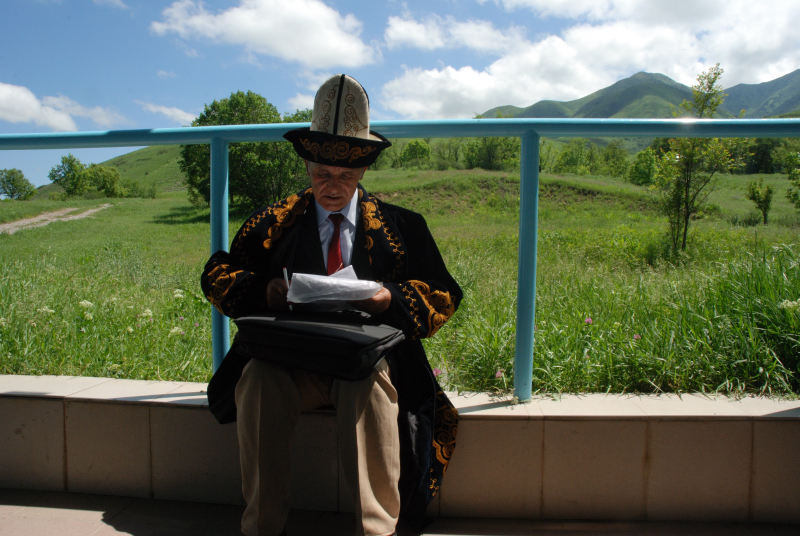
we have come to the Chong-Tash memorial with the keepers of Mazars - sacred sites. we sit down to pray. palms upwards. open. prayers for the world, its madness and its calm. Allah Akhbat. we break bread and share the music of prayer. Stalin, father of death. will the shaman voices expel his dark soul from the world?
Chong-Tash. November 5, 1937

shadows and blood.
we shall reconquer these areas. plant a tree of life and build an opening to the sky.

(many thanks to Aigine and Gulnara Aitpaeva for sharing this with me)
Monday, June 18, 2007
Reclaiming the Nomad - An Ode to Bishkek
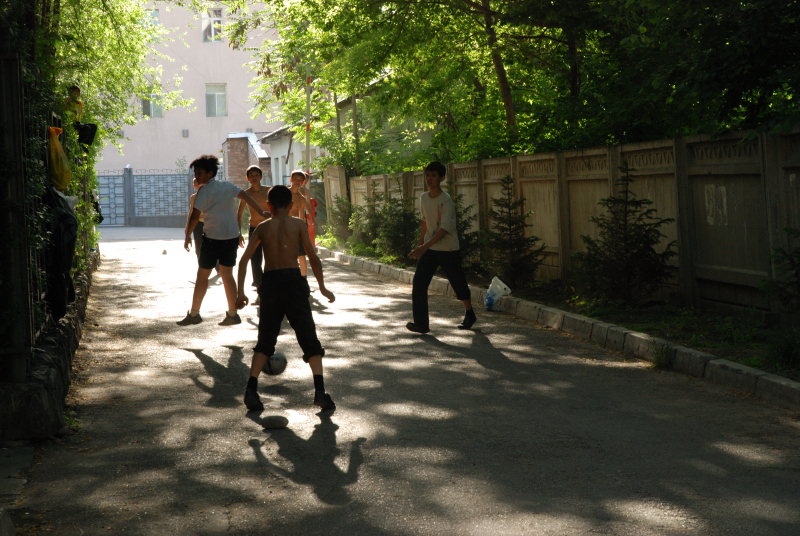
Kyrgyzstan is still pulsing with the spiritual heritage of the nomad, the Jailoos (summer pastures), the cycles of fattening and waiting, of summer and winter snows.
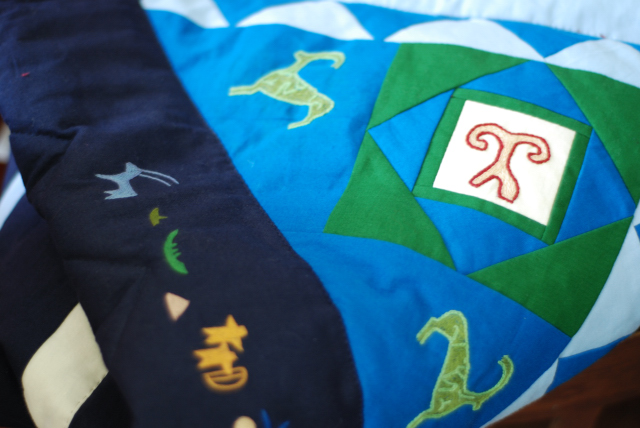
In May, beyond the urban center of Bishkek, these summer pastures are beckoning. The sacred, fought-for autonomy of families and tribes in the wild. Here once stood the traditions of survival and autonomy: beautiful color woven into the vast expanse. Balance and respect. Symbols bursting with meanings, interiorized and innate. Symbols of lives, woven, sewn and chiseled into rock and into crafts: arrows of departure and return. A rhombus for the world, for the patronage of the family: protecting and encompassing. Rams horns for wealth and prosperity, bird wings for flight and inspiration.
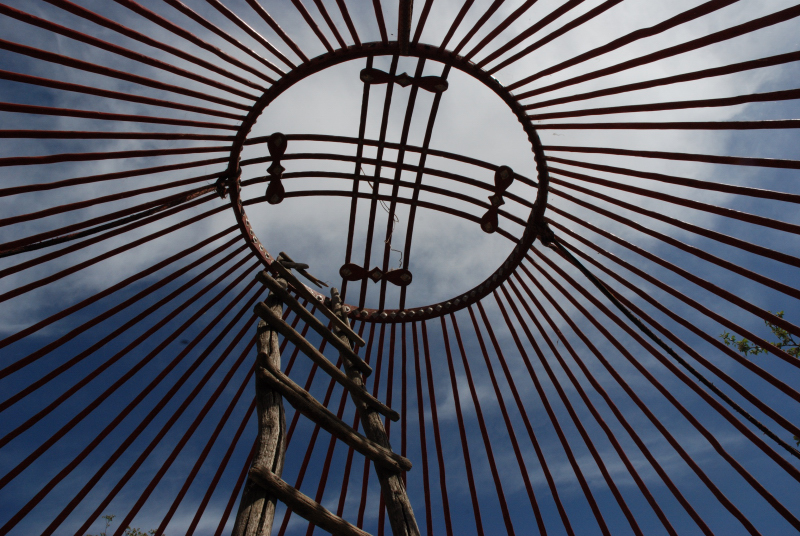
And at the center of the world, the opening. The yurt center, the Tunduk. Open to the stars, to the worship of the sun and the rain. The continuing importance of this symbol is embodied by the Kyrgyz flag on whose center reigns the Tunduk. red, daring.
Yurts are aperture: an architecture for the infinite.
There is a sacred to this place, still felt silently in the city. This is a people who could live in the wild – I imagine it to be a fierce knowledge, an autonomy among the chaos of the world. A love of freedom. Some gestures remain: an amen at the end of tea and bread. Guests entering when they appear. doors open, no need for phone calls or preparation. Here is a time made for guests and welcoming: the values of the wild mountains.
And among this mountain sacred – an urban center, open to the modern, bustling, global world.
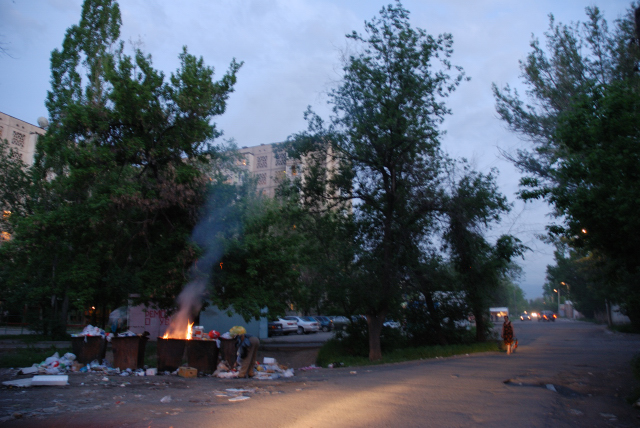
In its architecture and layout, Bishkek is a Soviet City, a capital of culture and administration. Theatres, parks, administrative buildings, schools, it is outfitted for urban exploration. It is a cacophony of languages and faces, Kyrgyz, Uzbek, Tajik, Kazakh, Chinese, Turkish, Indian, Uighour, Dungans, – French of course. Here the world collides. Faces. Postures. Fragrance. It is a city of movement.
The roads however are a catastrophe, an obstacle course of holes and crevices. The parks and sidewalks have not been weeded in years it seems. The street lights have not been fixed in decades. It is a city that blacks-out at night: not one streetlight for the late-night reveler. It seems that the administrative and physical upkeep of the city stopped when the Russians left. The people of Bishkek are now making due with the eroding infrastructure – decrepit enough to wonder what will happen to the city when the infrastructure really crumbles.
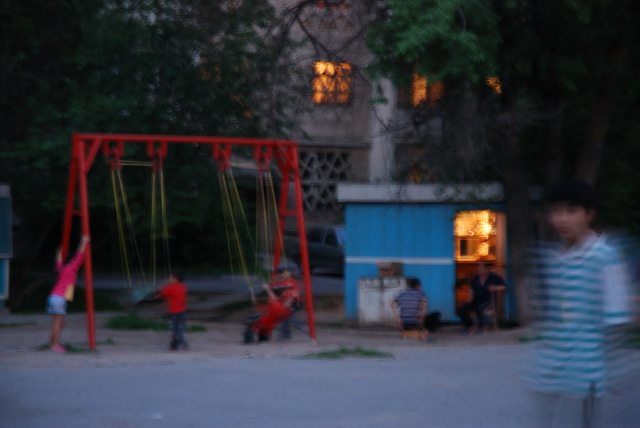
But Bishkek remains a true urban center. The city is a dance of femininity, unveiled, untempered. The streets are a competition of mini-skirts, a tik tak rhythm of high heels, a web of fish-net stockings. Though small by comparison to any other global city, Bishkek is an urban center in every sense of the word. A place of concentrated means and creativity, a place of open mores and values. The urban distance giving the anonymity and freedom to explore beyond traditional values, and the indifference or wisdom to accept difference.
And yet here in the city, traditions still enter and thrive. Surrounded mainly by women here – I hear mainly of the values that affect them. Virginity is still key – to be protected, sheltered and valued. Surgery to sew up the hymen is common, though completely confidential and low-key. Sexual freedom is in getting sewed back up. Women get married early – 23 is often considered old for marriage. When people ask me how many children I have, they are surprised that at 27, I am not even married. Women are more numerous than men here and so the competition for marriage is great, as is the shame of not finding a partner.
The city has not changed this altogether. The pressure seeps in from families in rural centers and time-old traditions.
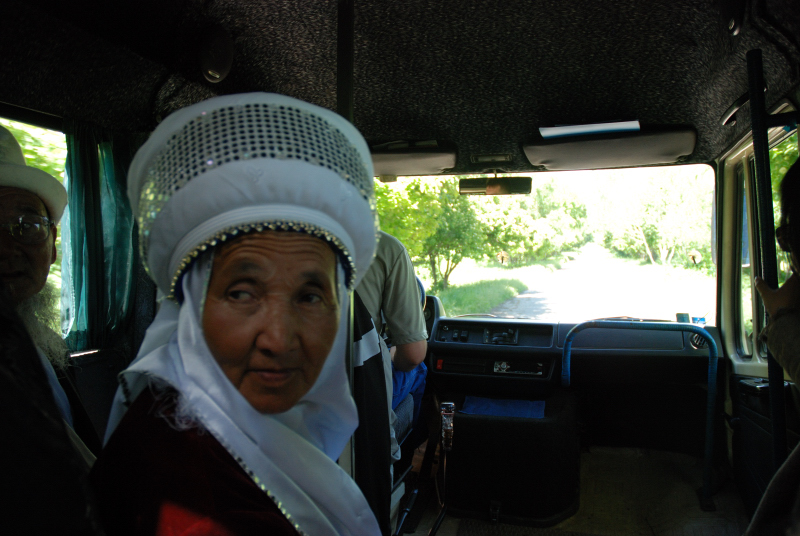
But there are those more delicate and (what I think are) good traditions that are felt here too. The spiritual and the sacred. The mountains seen from the city. Pictures of Manas – the Kyrgyz warrior – etched on city walls. A woman’s arms extended to the skies. Color. The golden toothed smiles. The long greetings. The forms of politness: Aka, Apa. The sacred balance of respect and rules. Traditional proverbs, stories told. The sound of Ordo Sakhna. The swinging hips of gypsy women.
Bishkek is a city alive. The mountains are close by.
Reclaiming the Nomad - a Mother and Daughter Team
A Mother and Daughter Team: Kalipa Asanakunova and Asel Saparkova
I am introduced by Galina Turdyeva – whose studio is in the adjacent building. Galina tells me that Asel and Kalipa, have a strong business – anchored in souvenirs and Christmas ornaments and that I should go talk with them. The door to Asel’s small studio is open. There is one table, at which two women work. Ornaments hang from the decorative branches of a wooden pedestal. A couch and table with the usual utensils for greeting impromptu guests: tea, coffee, cookies, candy and bread, are arranged in a corner.
Asel speaks great German, so the conversation with her is easier. Lucky as Elena has had to go back to school and can’t translate for me this afternoon. My Russian is still so painfully basic.
A Women’s World
Asel and I sit down to coffee. She’s a punk of a Kyrgyz with bleached blond hair. She’s got rocker shoes – those high-rising sneakers, worn down with that edge of cool. She’s wearing long blue-jean shorts and a black t-shirt. She’s comfortable in her body, and occasionally flicks back her dyed blond bang. She’s clearly a city girl – but a metallic city girl with that tough attitude.

I’m a little tired and so we sit down on the Ikea-like studio couch and have coffee and some samosas before a more formal interview. Asel asks me how old I am. Answering 27, she asks, like everyone else here, if I am married. No I tell her, I have just broken up with my lover of almost seven years. I have been thrust out into the world, strong and a little disoriented. She nods saying that sometimes it is right to leave, or be left. She’s breaking up with her husband right now, and is worried about her daughter. It’s a little sad to bond over sad love stories, but I like these impromptu moments of intimacy with women.
Back to Business
Asel’s mom, Kalipa, has been an artist and designer for the past 30 years. Seeing the market potential for felt souvenirs she joined in the stream of artists and opened her studio in 2000. She received a starting grant from Aid to Artisans – the American development organization that really (and surprisingly) has done an impressive and positive job in Kyrgyzstan. With that first USD 1,500 Kalipa was able to kick-start her creative and business visions.

Asel joined her five years ago to lead the business and sales aspects of the studio, while Kalipa focuses on the creative designs. At first Asel and Kalipa sold their products exclusively through craft stores in Bishkek (Tumar, Kyrgyz Style, Tsum etc.), but taking advantage of Asel’s German, the mother/daughter team started directly selling their products in Germany. Asel attends the Import Shop Berlin sales forum each year, where each year she sells almost everything that she has brought and also gets orders from several buyers.

Asel and Kalipa stand with pride in their studio, and with unfeigned pleasure they state that their organization is the second or third leading organization in Kyrgyzstan for felt products, behind only Tumar Studio. They state however that they are the uncontested leaders in the small souvenir market. Today their studio employs 50 women. They have a revenue of about 20,000 to 30,000 USD per year. Last winter alone they made 10,000 USD over the Christmas season. Theirs is a successful and profitable team.
A Kyrgyz Business Model
Asel and Kalipa follow the business model that I will encounter throughout Kyrgyzstan.

It is a business model centered on the need for high and consistent quality and design control. It also takes advantage of the high unemployment rate in Kyrgyzstan, providing part-time home-based labor to unemployed women.
The business model is centered on one studio/organization/NGO, but involves a wide network of female employees based in their homes, in the villages in close proximity of the organization. One or two studio leaders design all the crafts that will be made by the organization and its network. Based on those designs, four to five full-time salaried staff work in the main studio and prepare the various felt pieces that are needed for each design. They prepare the felt, choose the colors, and cut out the pieces according to pre-determined sizes. The four to five full-time workers than create “craft kits” which include the felt pieces, the chosen color of thread that will be used to assemble the pieces, as well as all the accessory beads or tassel.
The main studio then distributes these ready-made “craft kits” to their network of home-working women. These home workers will be paid per piece for their assembly and embroidering of the pieces. They bring the finished pieces back to the studio and pick up the next order of “craft kits”.

Integral to this business model is the idea of development. And these businesses not only create vital jobs, but are also aiding in the revival and preservation of traditional gestures and crafts.
As I am talking with Asel and Kalipa, two women are preparing the craft kits that will be distributed to their network of 50 women. One woman comes into the studio with her finished pieces. She is a young and beautiful woman, her work precise. Asel goes over each of the more than 30 pieces (small angel ornaments), making sure that they are well assembled. The work is well done. They give her a next “craft kit” that she will assemble over the next two weeks.
Kalipa says that many women come to the studio looking for work. They try to give as many women as possible the opportunity to work with them, but they say there are just too many women looking for employment. They are proud that they give good salaries to their network of women.
Asel and Kalipa are looking to expand, building a bigger main studio and employing a larger network of women. They are not going to take out a loan, but rather re-invest some of the previous years’ profit. Their biggest challenge will be how to find more demand – they know it exists, but they need the capability to seize and attract it. They tell me this would be possible with a multi-lingual staff.

They are optimistic about the future, and now have the financial security to take risks and explore market options. Watch this mother-daughter team get BIG.
I am introduced by Galina Turdyeva – whose studio is in the adjacent building. Galina tells me that Asel and Kalipa, have a strong business – anchored in souvenirs and Christmas ornaments and that I should go talk with them. The door to Asel’s small studio is open. There is one table, at which two women work. Ornaments hang from the decorative branches of a wooden pedestal. A couch and table with the usual utensils for greeting impromptu guests: tea, coffee, cookies, candy and bread, are arranged in a corner.
Asel speaks great German, so the conversation with her is easier. Lucky as Elena has had to go back to school and can’t translate for me this afternoon. My Russian is still so painfully basic.
A Women’s World
Asel and I sit down to coffee. She’s a punk of a Kyrgyz with bleached blond hair. She’s got rocker shoes – those high-rising sneakers, worn down with that edge of cool. She’s wearing long blue-jean shorts and a black t-shirt. She’s comfortable in her body, and occasionally flicks back her dyed blond bang. She’s clearly a city girl – but a metallic city girl with that tough attitude.
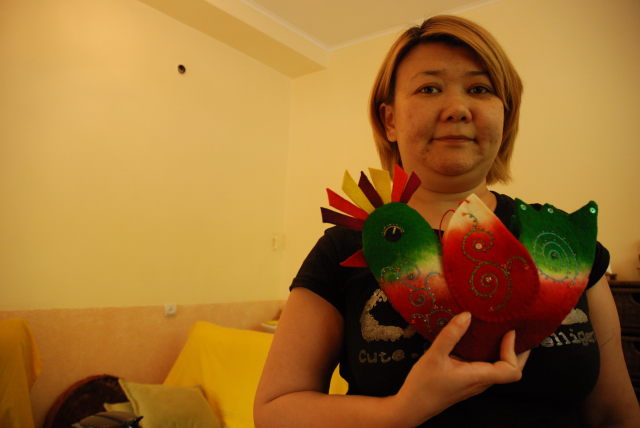
I’m a little tired and so we sit down on the Ikea-like studio couch and have coffee and some samosas before a more formal interview. Asel asks me how old I am. Answering 27, she asks, like everyone else here, if I am married. No I tell her, I have just broken up with my lover of almost seven years. I have been thrust out into the world, strong and a little disoriented. She nods saying that sometimes it is right to leave, or be left. She’s breaking up with her husband right now, and is worried about her daughter. It’s a little sad to bond over sad love stories, but I like these impromptu moments of intimacy with women.
Back to Business
Asel’s mom, Kalipa, has been an artist and designer for the past 30 years. Seeing the market potential for felt souvenirs she joined in the stream of artists and opened her studio in 2000. She received a starting grant from Aid to Artisans – the American development organization that really (and surprisingly) has done an impressive and positive job in Kyrgyzstan. With that first USD 1,500 Kalipa was able to kick-start her creative and business visions.
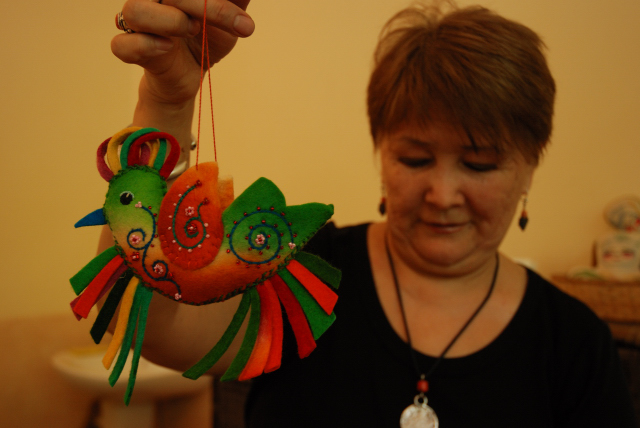
Asel joined her five years ago to lead the business and sales aspects of the studio, while Kalipa focuses on the creative designs. At first Asel and Kalipa sold their products exclusively through craft stores in Bishkek (Tumar, Kyrgyz Style, Tsum etc.), but taking advantage of Asel’s German, the mother/daughter team started directly selling their products in Germany. Asel attends the Import Shop Berlin sales forum each year, where each year she sells almost everything that she has brought and also gets orders from several buyers.
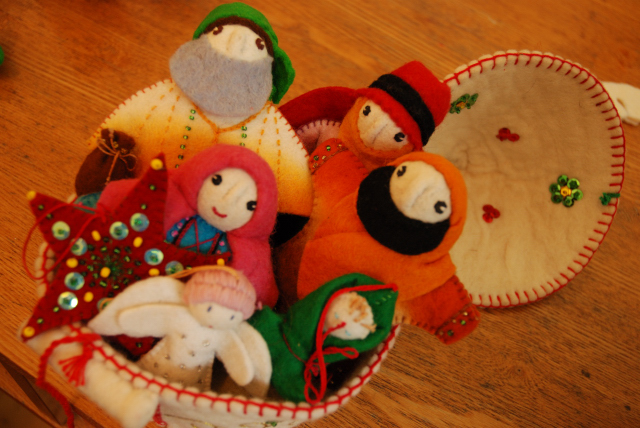
Asel and Kalipa stand with pride in their studio, and with unfeigned pleasure they state that their organization is the second or third leading organization in Kyrgyzstan for felt products, behind only Tumar Studio. They state however that they are the uncontested leaders in the small souvenir market. Today their studio employs 50 women. They have a revenue of about 20,000 to 30,000 USD per year. Last winter alone they made 10,000 USD over the Christmas season. Theirs is a successful and profitable team.
A Kyrgyz Business Model
Asel and Kalipa follow the business model that I will encounter throughout Kyrgyzstan.
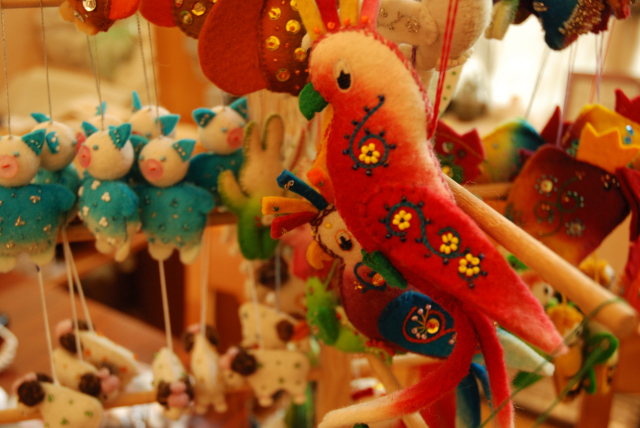
It is a business model centered on the need for high and consistent quality and design control. It also takes advantage of the high unemployment rate in Kyrgyzstan, providing part-time home-based labor to unemployed women.
The business model is centered on one studio/organization/NGO, but involves a wide network of female employees based in their homes, in the villages in close proximity of the organization. One or two studio leaders design all the crafts that will be made by the organization and its network. Based on those designs, four to five full-time salaried staff work in the main studio and prepare the various felt pieces that are needed for each design. They prepare the felt, choose the colors, and cut out the pieces according to pre-determined sizes. The four to five full-time workers than create “craft kits” which include the felt pieces, the chosen color of thread that will be used to assemble the pieces, as well as all the accessory beads or tassel.
The main studio then distributes these ready-made “craft kits” to their network of home-working women. These home workers will be paid per piece for their assembly and embroidering of the pieces. They bring the finished pieces back to the studio and pick up the next order of “craft kits”.
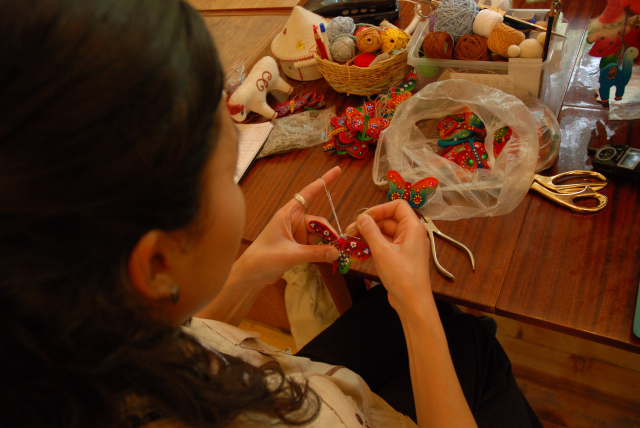
Integral to this business model is the idea of development. And these businesses not only create vital jobs, but are also aiding in the revival and preservation of traditional gestures and crafts.
As I am talking with Asel and Kalipa, two women are preparing the craft kits that will be distributed to their network of 50 women. One woman comes into the studio with her finished pieces. She is a young and beautiful woman, her work precise. Asel goes over each of the more than 30 pieces (small angel ornaments), making sure that they are well assembled. The work is well done. They give her a next “craft kit” that she will assemble over the next two weeks.
Kalipa says that many women come to the studio looking for work. They try to give as many women as possible the opportunity to work with them, but they say there are just too many women looking for employment. They are proud that they give good salaries to their network of women.
Asel and Kalipa are looking to expand, building a bigger main studio and employing a larger network of women. They are not going to take out a loan, but rather re-invest some of the previous years’ profit. Their biggest challenge will be how to find more demand – they know it exists, but they need the capability to seize and attract it. They tell me this would be possible with a multi-lingual staff.
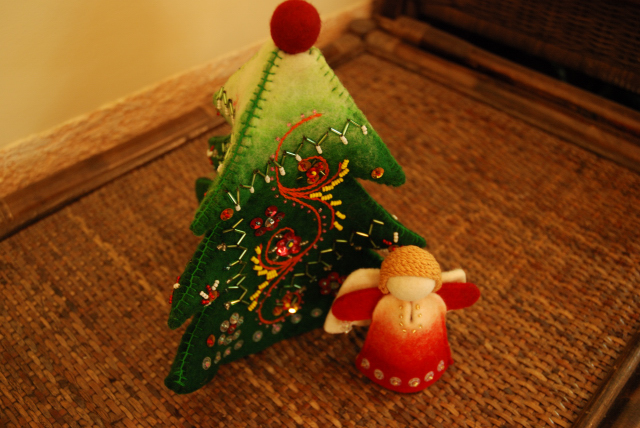
They are optimistic about the future, and now have the financial security to take risks and explore market options. Watch this mother-daughter team get BIG.
Reclaiming the Nomad - a Soviet Woman
Notes from a Converstation with Almadjan Mambetova, head of the crafts organization Kyrgyz Heritage
I meet Almadjan in her office in southern Bishkek, and later we go out for a beer. I return several times to talk with her. My sister Marie buys me a beautiful quilt from her store for my birthday. (merci)
I meet Almadjan in her office in southern Bishkek, and later we go out for a beer. I return several times to talk with her. My sister Marie buys me a beautiful quilt from her store for my birthday. (merci)
these are notes from the first talk we have.
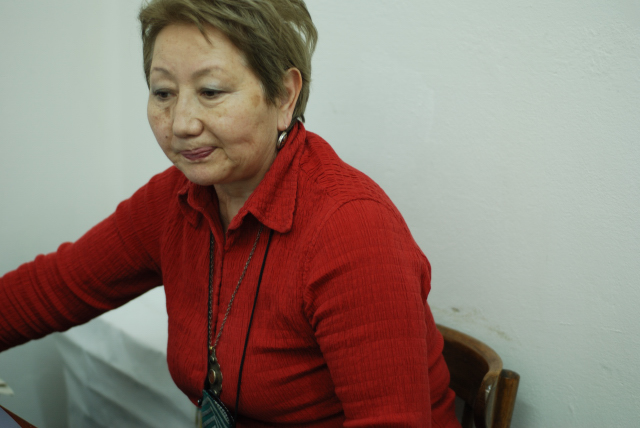
Almadjan is a bold woman. Short. compact and strong. She has perfectly messy bleached blond hair. Provocatively modern. She is not someone who will complicate her life it seems - she’s brutally straightforward. I like it. A sharp-shooter. She wears a touch of make-up, but she does not look flustered by her soft wrinkles. She is at ease with her age and her life. She has had many lives.
Almadjan talks about her daughter and her mother. She is part of a line of strong, bold, and strikingly unconventional woman. He mother was divorced and left her husband when Almadjan was a little girl. She was raised by women. You can feel the force she finds in her femininity. She wears ethnic silver bangles around her wrist. a red shirt and black pants. she’s put together. fresh.
Almadjan is a bold woman. Short. compact and strong. She has perfectly messy bleached blond hair. Provocatively modern. She is not someone who will complicate her life it seems - she’s brutally straightforward. I like it. A sharp-shooter. She wears a touch of make-up, but she does not look flustered by her soft wrinkles. She is at ease with her age and her life. She has had many lives.
Almadjan talks about her daughter and her mother. She is part of a line of strong, bold, and strikingly unconventional woman. He mother was divorced and left her husband when Almadjan was a little girl. She was raised by women. You can feel the force she finds in her femininity. She wears ethnic silver bangles around her wrist. a red shirt and black pants. she’s put together. fresh.
A Self-proclaimed Soviet Woman
Almadjan repeats, “Oh yes, I’m a Soviet Woman”
“We, Soviet women,” she says, “are highly educated.” According to her experience – a sentiment I will find throughout Kyrgyzstan - there is nothing bad or pejorative in being a Soviet woman. Her parents were communists, dedicated to communist ideals. “Honest, clear, clean,” she says. Her dad was a physics teacher, her mom a history teacher. “Nobody craved or lusted after money,” she says. “We traveled freely around the USSR. As a child, I went to Tashkent, Moscow. Probably the only problem with the Soviet Union,” see notes, “was that is was closed. We didn’t see much luxury, but we felt secure, in jobs and as persons.”
She admits that much of Stalin’s policy for Central Asia was to exploit and tax the land, killing the brightest and strongest of the Kyrgyz men and women, not letting them become a strong nation. But she says, “the USSR gave much to Kyrgyzstan. They gave us access to the world, to world culture, to literature, science and technology. They gave us the notion of statehood. They gave us literacy. This is why it makes no sense for us to tear down Lenin’s statues. This is why we can remember.” Almadjan marks however that “of course there were many negatives which stemmed from the narrow policy of communist party leaders. Collectivization was brutal and unnecessary. Nationalists were also punished and suffocated. But our crafts never stopped. The Embroidery, the Shyrdaks, the Kurak all continued.”

Under the USSR, talented craftspeople were organized under the banner of the “State Crafts Union” which centralized creation and industrialized production. Quantity was often more important than quality. Styles were chosen by the factory’s designers – often inspired by Moscow. The Soviet presence did severely impact – almost impair handicrafts. Speaking recently in Uzbekistan with Mutalibjan, the second in command at Andijan’s Hunarmand Crafts Association, he confided that had the Soviets stayed 20 more years, most of Central Asia’s crafts traditions would have been lost.
The Fall of the USSR
An English teacher at one of Bishkek’s top universities – Almadjan was armed for the fall of the Soviet Union. She had acquired the tools to reach out to the English-speaking world. She quickly went to work for the US government – the second country, after Turkey to open its Embassy in the Capital. (The US was indeed eager to get its foot in the door.) Almadjan joined the government’s USIS – the US Information Services here in Kyrgyzstan, where she was exposed to the ins-and-outs of American culture, and introduced to the money, grants and support that US organizations were willing to give to Central Asia.

Having acquired the experience, expertise and confidence, in 1996 Almadjan opened one of the first NGOs promoting women’s rights in Kyrgyzstan. She then wrote a plan to the Soros Foundation – one of the largest donors in Kyrgyzstan, doing outstanding and interesting work. She met with George Soros and got her project supported. She’s the kind of strong woman you want to give money too – she looks fierce, as if she could blast through any obstacles. fearless. Its easy to see how she could have seduced the philanthropic American billionaire.
She designed an international conference on “Patchwork and Modernity”. Three days of roundtables, master-classes and exhibitions.
Kyrgyz Heritage
Inspired by the idea of combining Patchwork and Modernity, and driven by the need to do more to support the many unemployed women she was meeting, Almadjan decided to open a crafts business. With an original group of 5 women, the crafts business openned in 2001. Each woman invested 2,000USD into the venture. They looked for skilled and talented women who could embroider and felt and launched themselves.
“The beginning was a waste of time,” says Almadjan. “We wasted so much time and resources. We were not business minded, and didn’t really understand the market we were entering. We didn’t know how to keep our production up to international standards – we didn’t know the basics, like which colors would sell, which sizes fit our biggest demand pool.”
“It was two years spent out in the rain,” Almadjan says, “All our money disappeared.”
Then a Canadian consultant came to help their faltering organization. She was a retired consultant, ready to act as a volunteer advisor for the organization. She turned the organization around. She came three times for two weeks over a three year period. She made an electronic catalogue to send to potential buyers, she donated a digital camera so that the organization could share their work. Most of all, the consultant designed and wrote a business plan for the company. She conducted business seminars, and developed an order form. Almadjan, sums it up saying: “basically, the consultant taught us how to run our business.”
Today there are 23 women who work part-time from their homes as seamstresses for the company – renamed Kyrgyz Heritage - as well as 7 full-time staff. Most of the 23 woman are originally from the countryside, but now reside in Bishkek. The company is focused on Kurdak – patchworking.
Her business is doing well, but Almadjan says the competition is FIERCE. She claims that there are over 300,000 people working in crafts today in Kyrgyzstan. Out of a population of 5 million, this is quite substantial.
Symbols
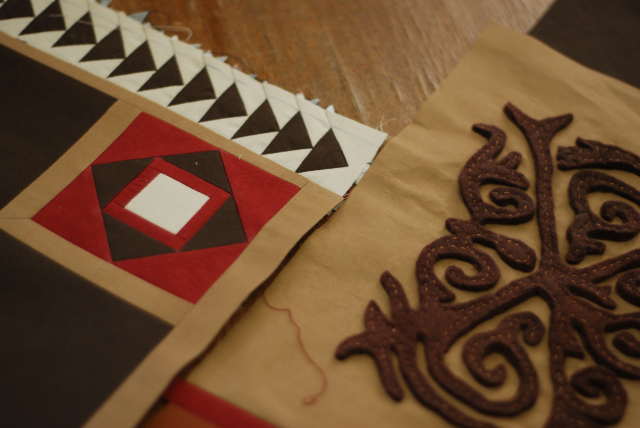
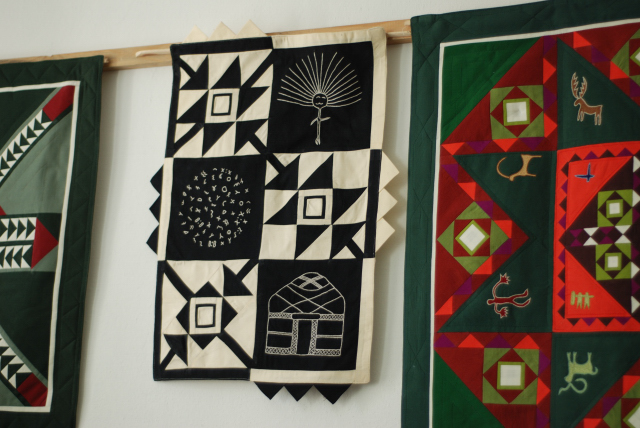
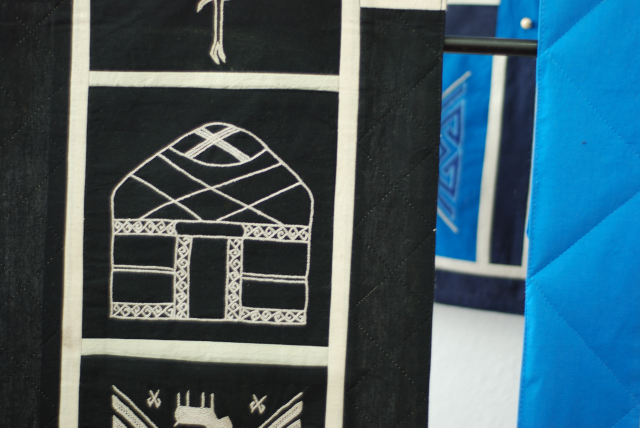
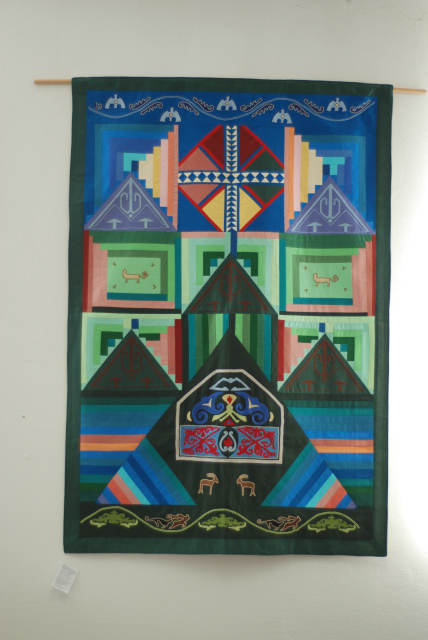
Today, Kyrgyz Heritage is focused on reviving traditional Kyrgyz patterns and symbols in Patchwork. The company makes quilts, wall-hangings, bags, pillow-covers, table liners – you name it - all boldly designed with the symbols of the Kyrgyz nomads.
“We [the Kyrgyz] have our own way of thinking,” says Almadjan. “The early Kyrgyz were children of nature. They considered themselves as part of nature: the sun, moon, mountains were intertwined in their lives. They knew a cyclical time, led by the equinox. At Kyrgyz Heritage, we have integrated this knowledge in the crafts we make today. We incorporate the meaningful ornaments of the past.”
mountains. nomads. infinite. skies and the sun.
Even if the symbols and some gestures remain, today, most Kyrgyz have lost the knowledge of their ancestors self-sufficient way of life. So that the mountains that once protected and nourished their forefathers – are now serious obstacles to development.
(enough to wonder if the nomadic lifestyle was not much more adapted and better for the high mountains. sometimes, I feel that these are the lifestyles that will save the world when we have blasted the planet with our delirious consumption and ignorance – another story – but some people are working on the question and trying to preserve this nomadic knowledge for use around the world, especially in refugee camps. The Yurt Revolution)
back to mountains and the development challenge they pose.
About today’s economic crisis
“We are 97% mountainous,” says Almadjan. “We have to deal with high-mountainous conditions. Roads, development, everything is harder here. Compounded with constant earth-quakes, landslides. This is eating at the state budget. Everything is more expensive in Kyrgyzstan. Furthermore, we are landlocked – we have to pay for all our access. We have to pay everyone.” Almadjan says.
Almadjan sees the end of the Soviet Empire as having the scale and amplitude of a revolution. Any revolution she says is accompanied by a severe crisis in all spheres of life: economic, morality, culture (tradition), education. She says that the transitional period after a revolution can last anything from 5 to 50 years depending on the geopolitical interest/policy/leaders. It has been almost 20 years already for Kyrgyzstan.
This is a hard burden. time stretched out and frozen.
I ask Almadjan about the role Islam can play in Kyrgyzstan
She says that Islam is a “young and aggressive religion.” She thinks that Islam is at the top of its spiral – peaking globally. But after this peak, she says Islam will start to decline on a global scale. “Of course we [the Kyrgyz] converted, but we are modern,” she says. She believes that 90% of Kyrgyz traditions are nomadic, she accords only 10% to Islam.
(This an answer from a “Soviet Woman” – and many contesting ideas emerge over the next weeks in Kyrgyzstan. but the country is overwhelmingly liberal and more about personal-religious experience rather than canonical/institutional frameworks.)
Almadjan points out that the traditional ornamentation of Kyrgyzstan’s crafts are devoid of religious influence. Ornaments have preserved the nomad’s beliefs – their links with the natural world, their worship of the stars and the sun. The ornaments, she believes have preserved the meaningful, informative symbols of the nomads. Every hook, every turn in the design has some semantic meaning. Reflecting the openness of the plain, the freedom of the nomads.
It is these meanings that Kyrgyz Heritage tries to revive.
The Future of her Business
The seasonal shifts in demand she says are “absolutely frustrating”. In the summer tourist months the company runs smoothly, but the winter is hard to get through. The company still needs to stabilize demand and find new year-round buyers.
Furthermore, Almadjan laments that “there is no support for the business community here, especially the small-business community. The unstable political situation is hurting us – it’s hurting our production lines: women can’t come to work if there are demos going on. It’s hurting our demand, as tourists don’t want to travel to Kyrgyzstan if there is political instability.”

She has been to the demos raging this week out on Ala Tau Square. She’s trying to oust the current president – a “southy” she says pejoratively. She will be at the front-lines of change.
She’s 62.
Subscribe to:
Posts (Atom)